
Step 5 — Regulating the Autonomic Nervous System (ANS) for Fluent Speech
This is where your body stops fighting your speech
Step 1 - you understand stuttering.
Step 2 - you learn the tools.
Step 3 - you incorporate fluent speech strategies.
Step 4 - you have begun rewiring your brain with fluent speech neuropathways.
Step 5 - ensures your nervous system allows you to use them—especially under pressure.
In Step 5 we address the physiological system that determines if you are in a ventral-vagal state of social engagement, or parasympathetic state of fight-or-flight where speech can become blocked.
Step 5 combines education, nervous system regulation practices, and guided use of the Safe and Sound Protocol to create the physiological conditions where fluent speech becomes easier and more reliable.
Best Value — Save $500
Recommended after completing Step 4
Trusted by people who stutter in 20+ countries

Fluent speech becomes far easier
—and far more reliable—
when the nervous system is properly regulated
Why the Nervous System Matters for Speech
Speech is not just a cognitive or motor process—it is deeply physiological.
It is regulated by your Autonomic Nervous System (ANS) — the system responsible for:
-
Safety vs. threat detection
-
Fight-or-flight responses
-
Muscle tension
-
Breathing patterns
-
Vocal control
When the autonomic nervous system perceives threat, speech becomes vulnerable — even with excellent tools and training.
Step 5 teaches your body that speaking is safe.
The Missing Piece in Most Stuttering Approaches
Traditional speech therapy focuses on:
-
Mechanics
-
Acceptance
-
Coping strategies
What it often ignores is this:
A dysregulated nervous system will override conscious speech control.
This is why:
-
Fluency disappears in high-stakes situations
-
Blocks appear unexpectedly
-
Speaking feels effortful even when you “know what to do”
Step 5 corrects this at the physiological level.
Recommended after completing Step 4
What
Step 5
Does
for Speech
Step 5 focuses on regulation, safety, and resilience.
You will:
-
Reduce baseline nervous system arousal
-
Decrease speech-related fight-or-flight responses
-
Improve vagal tone (the body’s calming pathway)
-
Support relaxed breathing, voice onset, and speech flow
-
Make fluent speech easier to access under stress
This is how fluency becomes pressure-proof.
Safe and Sound Protocol (SSP)

Dre. Stephen Porges
The Safe and Sound Protocol (SSP)
The Safe and Sound Protocol (SSP), developed by Dr. Stephen Porges, is used by mental health professionals, therapists and sensory integration practitioners as an adjunct therapy to help their clients regulate their nervous systems, process external cues and signals more effectively, and attain a grounded state in which they feel safe and receptive.
SSP does not teach you how to speak—it teaches your nervous system that speaking is safe.
Polyvagal Theory
The Safe and Sound Protocol (SSP) is rooted in the science of Polyvagal Theory, offers a unique, evidence-based approach to nervous system regulation. By harnessing the power of sound, the SSP targets the vagus nerve to calm the body’s fight, flight, or freeze responses, helping individuals achieve a state of safety and balance.
Polyvagal Theory is a scientific framework that supports the integration of physiological (“bottom-up”) therapies with cognitive (“top-down”) approaches to help change and improve how we feel, think and connect with others.
Polyvagal Theory focuses on what is happening in the body and the nervous system, and explains how our sense of safety, danger or life threat can impact our behavior.
This opens the door for other therapies (e.g., StutterMind -Stop Stuttering) to become more accessible, impactful and accelerated.
---
Recommended after completing Step 4

The
Science
The Vagus Nerve
The mind and body are connected through the vagus nerve, the longest nerve in the autonomic nervous system, stretching from the brainstem to the colon. It is our internal control center, allowing the brain to monitor and receive information about many of our bodily functions.
The vagus nerve helps to regulate critical aspects of human physiology, including the heart rate, blood pressure, temperature, digestion and even speaking. As the body takes in information automatically through neuroception, the vagus nerve communicates this information to the brain, which processes the signals and cues from the world around us and in turn determines how we react through three physiological states: Parasympathetic/ventral vagal, sympathetic, or dorsal vagal.
AUTONOMIC LADDER
Three (3) Hierarchical Physiological States
-
Parasympathetic/ventral vagal state: Our centered "true-self" state, where all social interaction, connection and creativity occurs.
-
Sympathetic state: Feeling of threat or danger, and feeling the need to either "flight" or "flee" from a situation to seek safety.
-
Dorsal vagal state: Our "freeze" state, when we feel our lives are so immediately threatened that we become immobilized.

The autonomic ladder, as envisioned by Deb Dana (2018), is one way to visually represent these physiological states.
---

The
Music
The music of the SSP has been filtered through a patented, evidence-based algorithm that highlights specific sound frequencies that help regulate the autonomic nervous system and stimulate the vagus nerve. The SSP music sends cues of safety to your nervous system, building the foundation for awareness, embodiment and resilience.
SSP Music
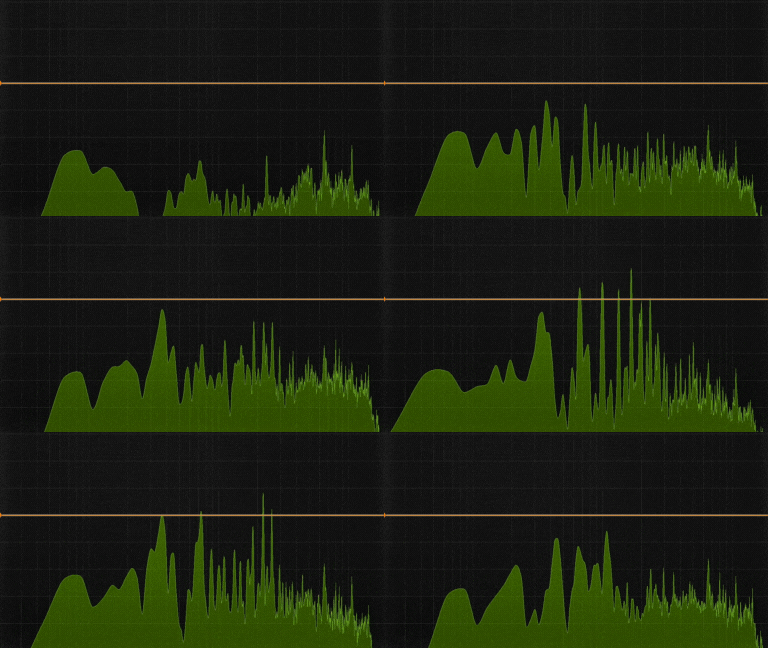
The music of the SSP is unlike any other. Each track has been filtered through a patented algorithm that highlights specific sound frequencies that are similar to the human voice.
Unfiltered Music
This is an example of the full-spectrum sound frequencies in a typical unfiltered clip of popular music.
Filtered Music
Here is the exact same clip — after being filtered through the evidence-based algorithm backed by decades of scientific research.
SSP Playlists
The SSP contains several vocal and non-vocal music playlists and levels of filtration to support engagement and participation in the listening process. Multiple vocal and non-vocal playlists allow the SSP to be customized for listening.
---

Step 5
Core Components
Autonomic Nervous System Education
You will learn:
-
How the ANS influences speech
-
Why stuttering is often a triggered survival response — not lack of confidence
-
How stress, anticipation, and vigilance disrupt fluency
-
How regulation restores access to fluent speech
Understanding this removes self-blame and restores control.
Safe & Sound Protocol® (SSP) Access
Step 5 includes access to the Safe & Sound Protocol (SSP) — a patented listening therapy designed to regulate the nervous system through the auditory pathway.
SSP helps:
-
Reduce physiological stress responses
-
Improve nervous system flexibility
-
Increase feelings of safety during communication
-
Support social engagement and vocal control
You will receive:
✔ Guided onboarding
✔ Listening instructions
✔ 12 months of SSP access (purchased separately cost $2,000)
✔ Practitioner support from Michael Ferris (certified provider)
Speech-Specific Regulation
This step focuses regulation where it matters most — during speaking.
You will learn how to:
-
Recognize early signs of nervous system activation
-
Prevent escalation into blocks
-
Support relaxed voice onset
-
Maintain fluency in social, professional, and emotional situations
Why This Step Changes the Experience of Speaking
After Step 5, many members report:
✔ Less anticipatory tension
✔ Calmer speech initiation
✔ Reduced fear of “losing fluency”
✔ Greater confidence without effort
✔ Fluency holds even when emotions rise
This step makes fluent speech less effortful and more reliable.


What Members Say After Step 5
What changes when the nervous system stops driving speech.
Members often describe this as the moment their body stops fighting their voice.
“This was the first time my body stopped fighting my speech.”
— Jill (28), Chicago, IL
“My speech stopped feeling like something I had to manage. It just started happening on its own.”
— Alex (32) Austin, TX
Upcoming Live Class Times Step 5 – Regulating the Autonomic Nervous System (ANS)
Choose Your Live Class Date & Time
Step 5 — SSP & Nervous System Regulation
$299 / Payable with plan

New Step 5 class dates are added monthly.
All Step 5 sessions teach the same material — choose the date that best fits your schedule.
Class size is intentionally limited to 6 participants to ensure personalized coaching.
How Step 5 Fits Into Your Full Transformation
Step 1 — Understanding
Step 2 — Tactical Tools
Step 3 — Strategic Tools
Step 4 — Brain Training
Step 5 — Nervous System Regulation
Step 6 — Expert Guidance & Integration
The final step focuses on implementation, maintenance, and real-world mastery.
Best Value — Save $500